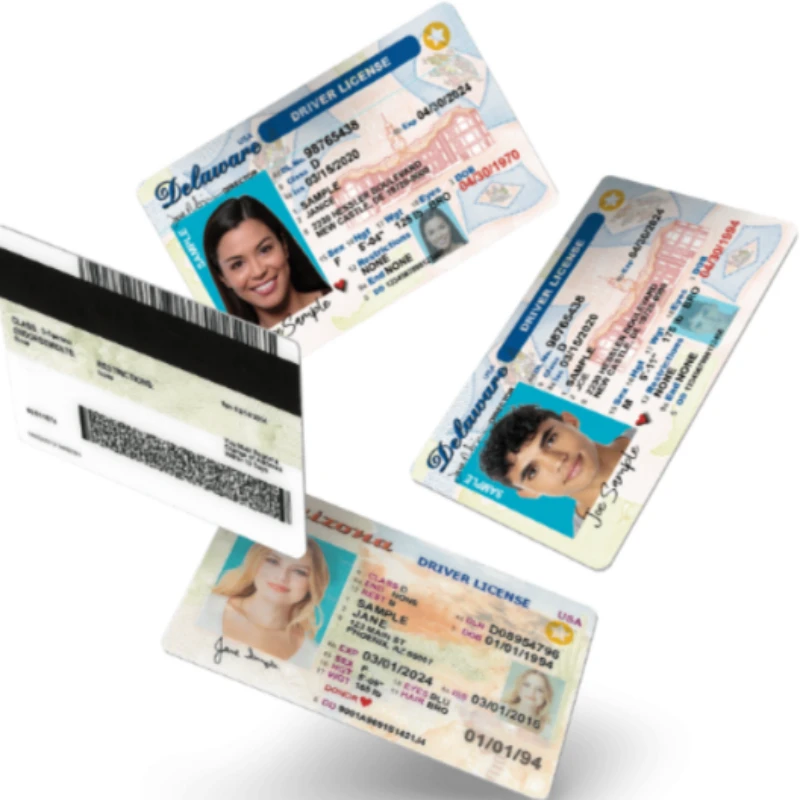
Identity cards, driver's licenses, passports and other security documents are the core carriers of personal identity. The materials and printing technologies used directly affect their anti-counterfeiting performance, durability and data security. PC card base film, with its unique properties, has become the "invisible necessity" in the high-end security printing field, supporting the trillion-dollar security document industry.
Why choose PC card base film?
The cornerstone of security and anti-counterfeiting.
High transparency: Compatible with precision printing processes such as laser engraving and microtext printing, like the "Great Wall" watermark on ID cards and the ultraviolet fluorescent patterns on passports;
High weather resistance: No deformation within the temperature range of -30℃ to 120℃. Avoid warping or fading of the documents due to temperature differences or sunlight exposure (the lifespan of ordinary PVC cards is only 5 years, while PC cards can last for over 10 years).
Anti-tampering: The multi-layer composite structure is irreparable after being damaged, preventing information tampering.
Data storage compatibility
Compatible with RFID chip embedding and the wireless communication antenna of electronic passports, it is resistant to bending and anti-electromagnetic interference.
The surface can be coated with an anti-static layer to protect the chip from being punctured by static electricity.
Technical upgrade direction
Anti-counterfeiting process integration:
• Laser perforated coding (such as the "invisible numbers" on German passports);
• Transparent window + holographic film (for the new version of Chinese driver's licenses);
• Optical color-changing coating (the color gradient effect of the electronic ID card).
Intelligent Extension:
Support for direct encapsulation of eID digital identity chips to meet the requirement of "one card with dual interfaces" (contact + contactless read/write).
Environmental compliance:
The EU has mandated that travel document materials comply with RoHS standards. The demand for halogen-free flame-retardant PC films has soared.
Market Dynamics
Policy-driven: More than 80 countries worldwide have implemented electronic passports. China plans to basically popularize the third-generation ID cards (integrating biometric data) by 2025, which will drive the annual demand for high-end PC membranes to exceed 50,000 tons.
Domestic substitution: Companies like Kailai and Kangdexin have made breakthroughs in "ultra-thin and high-strength" technology, reducing their reliance on imports from 70% to 40%.