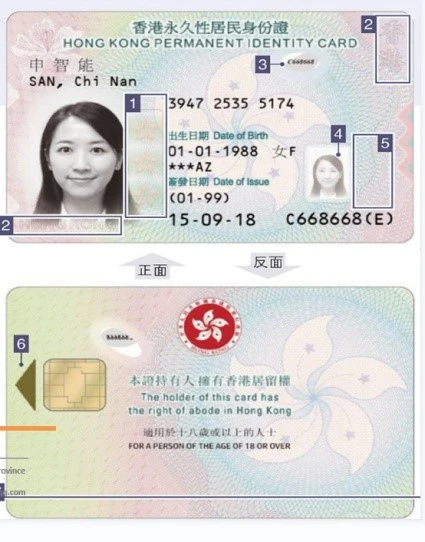
The government and financial institutions have shown great favor towards PETG card base material identity cards, mainly due to the following multiple advantages:
High security
Anti-counterfeiting composite structure: Multi-layer PETG substrate (such as the 7-layer composite of the second-generation ID card) provides physical anti-tampering performance, compatible with laser engraving, RFID chips and holographic anti-counterfeiting technology.
Resistance to physical damage: The shock resistance and scratch resistance features enhance the service life and support complex processing techniques (winding, slot milling, etc.).
2. Environmental Compliance
Biodegradable/Recoverable: Free of chlorine and heavy metals, compliant with international environmental standards such as GRS, and suitable for green policy orientations (such as the replacement of the third-generation social security cards).
3. Superior Performance
Durability: More resistant to aging and chemical degradation than PVC, with a lifespan exceeding 20 years.
Processing adaptability: Supports heat sealing and UV printing. The equipment compatibility is higher than that of PC materials, thereby reducing production costs.
4. Standardized Certification
It has passed the technical standards of the Ministry of Public Security (softening point of Vicat ≥ 75℃, transmittance ≥ 88%), and has been recognized by international organizations such as Visa. It is applied to cross-border documents (such as Hong Kong and Macao passes).
5. Cost controllable
Large-scale production and multi-scenario reuse (for bank cards, access control cards) have reduced marginal costs, and the export proportion has increased to 28.58% (in 2023).
Due to its safety, environmental friendliness, durability and mature industrial chain, PETG card base film has become the mainstream choice for smart card substrates. The demand for it continues to grow as the document replacement cycle (starting from 2024) progresses.