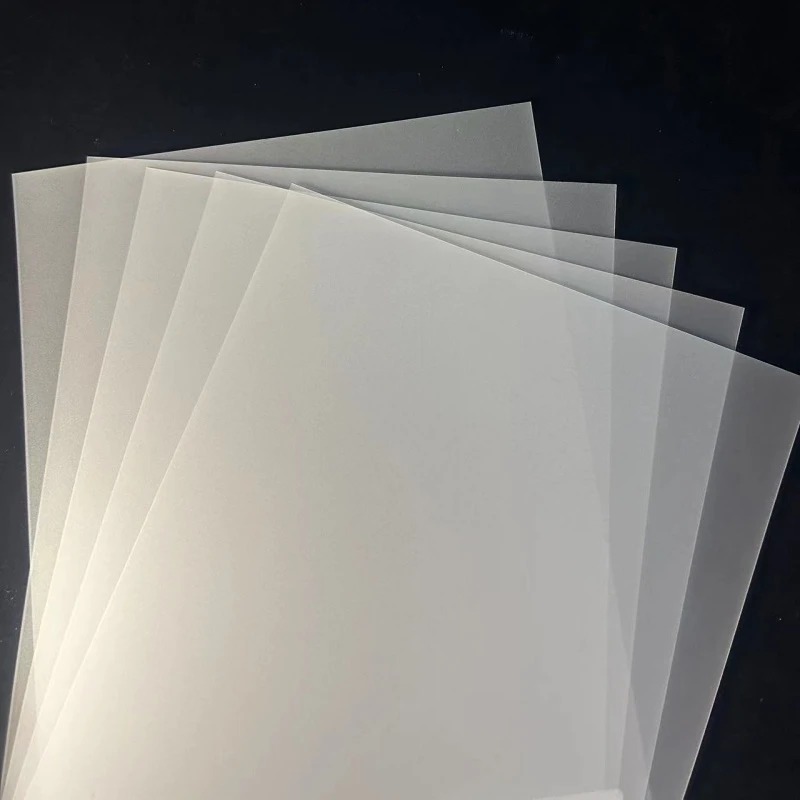
PC thin films not only have excellent electrical properties, but also have excellent physical and mechanical properties. Below, we will introduce in detail the characteristics of PC thin film materials. Let's take a look together!
PC film is the abbreviation for polycarbonate film, with a minimum thickness of 0.05 mm. It is an amorphous, odorless, non-toxic, and highly transparent colorless or slightly yellow thermoplastic engineering plastic with excellent physical and mechanical properties.
Especially with excellent impact resistance, high tensile strength, bending strength, and compressive strength; Low creep resistance and stable size; It has good heat resistance and low temperature resistance, stable mechanical properties, dimensional stability, electrical properties, and flame retardancy over a wide temperature range, and can be used for a long time at -60~120 ℃; No obvious melting point, in a molten state at 220-230 ℃.
The viscosity of the resin melt is high because of the high stiffness of the different color charts in the molecular chain PC film; low breathability of the film, low rate of water absorption, low rate of shrinkage, excellent dimensional accuracy, and good dimensional stability; belonging to materials that extinguish themselves; stable to light, with strong weather resilience, but not resistant to UV light; It is soluble in chlorinated hydrocarbons and aromatic solvents, resistant to oil and acid, and not resistant to strong alkalis, oxidizing acids, amines, or ketones. Cracking and hydrolysis are easily brought on by prolonged contact to water. Poor wear resistance, solvent resistance, stress cracking, and fatigue resistance are the drawbacks.